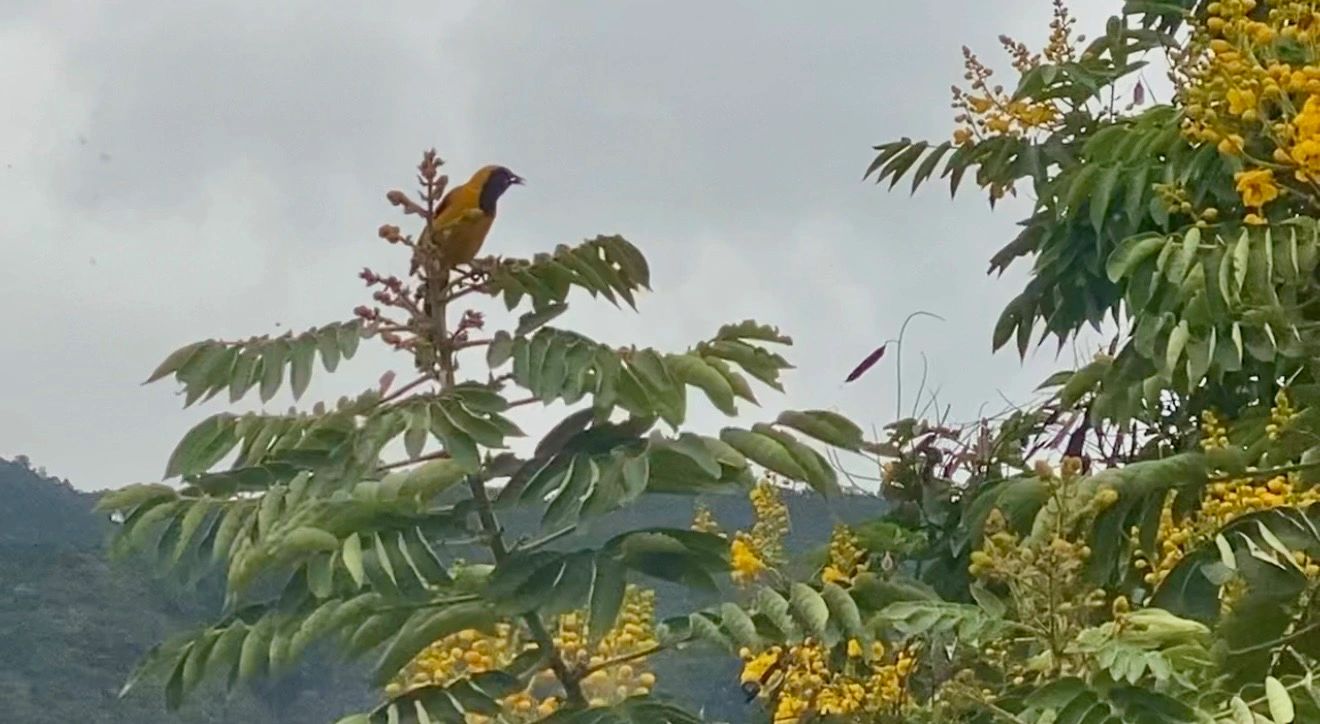
Subachoque, Colombia
REGENERATIVE AGRICULTURE: PRODUCING WHILE RESTORING
In the high Andes of Colombia, HPF supports an ongoing effort to restore biodiversity while demonstrating how agriculture and ecological restoration can work together. The project brings together local knowledge, scientific understanding, and practical experience to regenerate the landscape while supporting productive land use.
Through restoring native vegetation, improving soil health, managing water, and integrating regenerative farming practices, the project explores how productive landscapes can also support biodiversity. It is a place for learning, experimentation, and exchanging knowledge with farmers, students, and partners from Colombia and beyond..

RESTORING BIODIVERSITY IN SUBACHOQUE
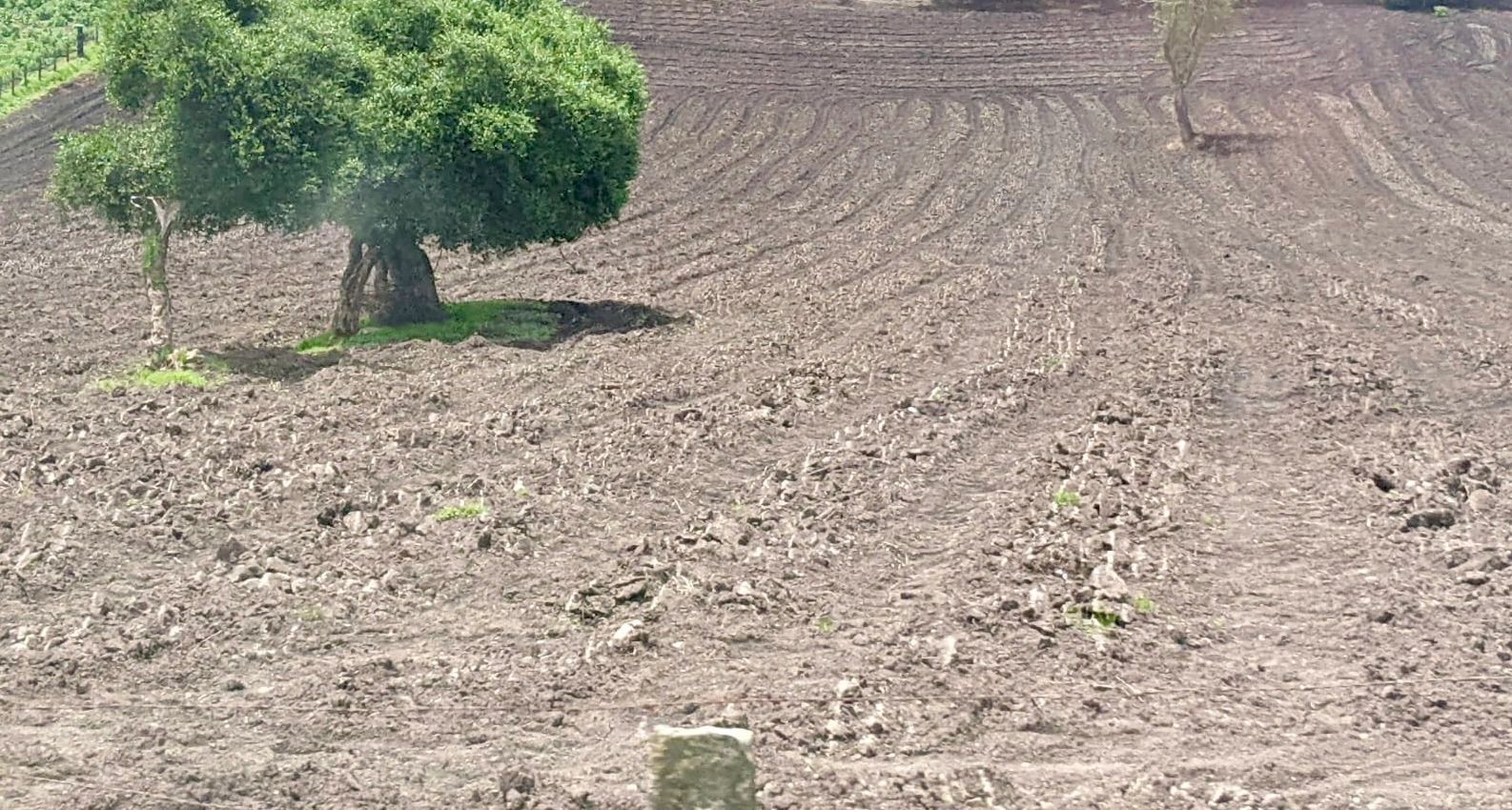
RESTORING DEGRADED AGRICULTURAL LAND
Years of intensive farming and agrochemical use degraded the land. Today, we are restoring soil health, native vegetation, and biodiversity through regenerative agricultural practices.
Water as Part of the Living System
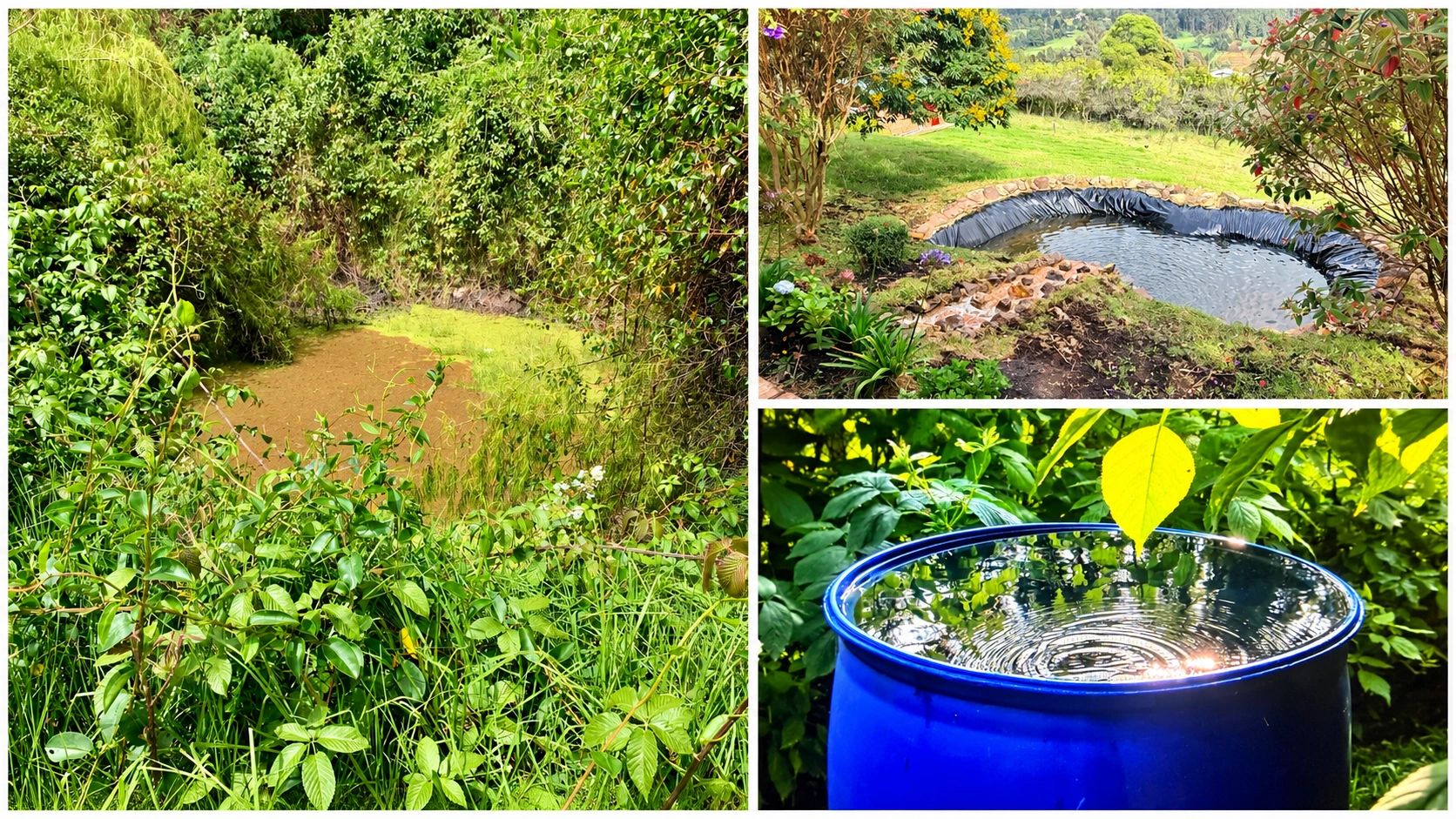
Rainwater collection, reservoirs, canals, and a pond help retain water within the landscape.
Water infrastructure can do more than store water.
A rainwater pond began attracting frogs. What began as a practical response to water management also began functioning as habitat.
REGENERATIVE AGRICULTURE: PRODUCING WHILE RESTORING
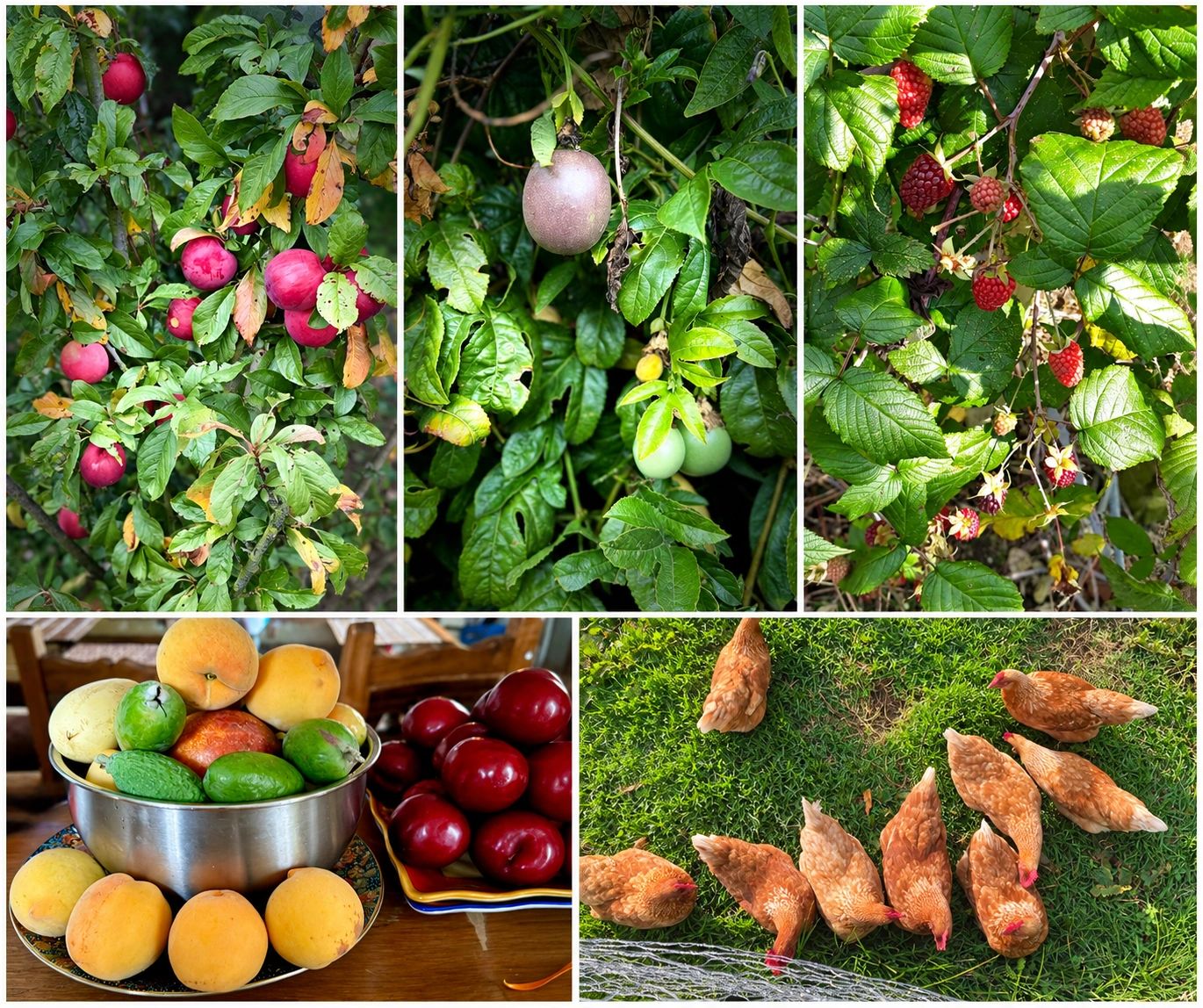
The goal in Subachoque is not to remove agriculture from the landscape. It is to explore how agriculture itself can become part of ecological restoration.
Healthy soil is central to that effort. Practices such as composting, cover crops, mulching, reduced soil disturbance, regenerative grazing, terracing, and water retention are being used to improve soil while keeping land productive.
The project is also experimenting with more diverse agricultural systems. Farmers have exchanged knowledge about agroforestry, soil health, water management, rotational grazing, and diversified farming systems.
FARMERS AS LEARNERS—AND TEACHERS
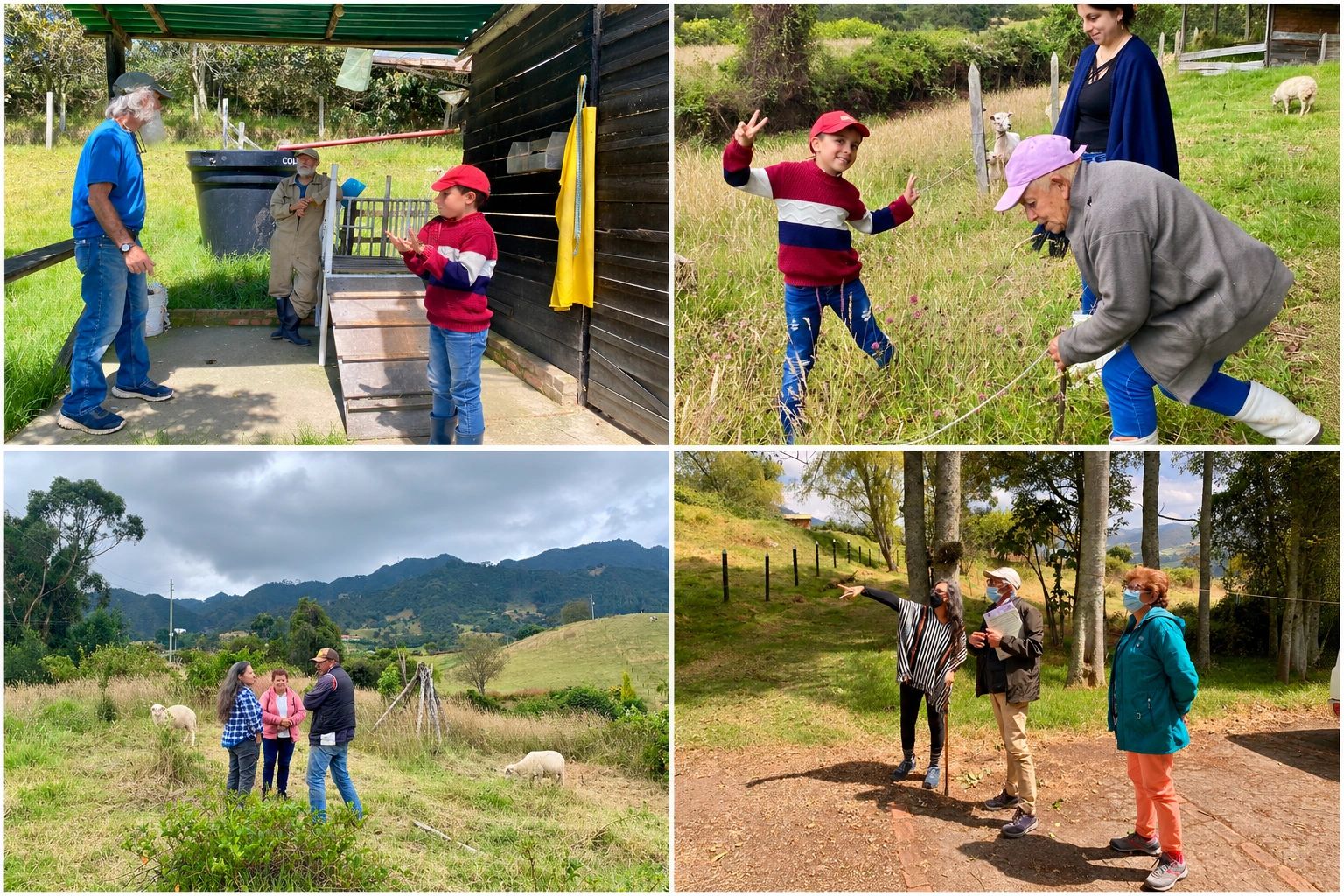
Knowledge in Subachoque does not move in only one direction. Farmers bring knowledge developed through years of working with land, crops, animals, and changing conditions. Researchers and practitioners contribute other forms of knowledge. Visitors bring experiences from other places.
Learning through practice. Farmers share practical knowledge about composting, soil health, and regenerative approaches that can be tested and adapted to local conditions.
THE LANDSCAPE AS A CLASSROOM
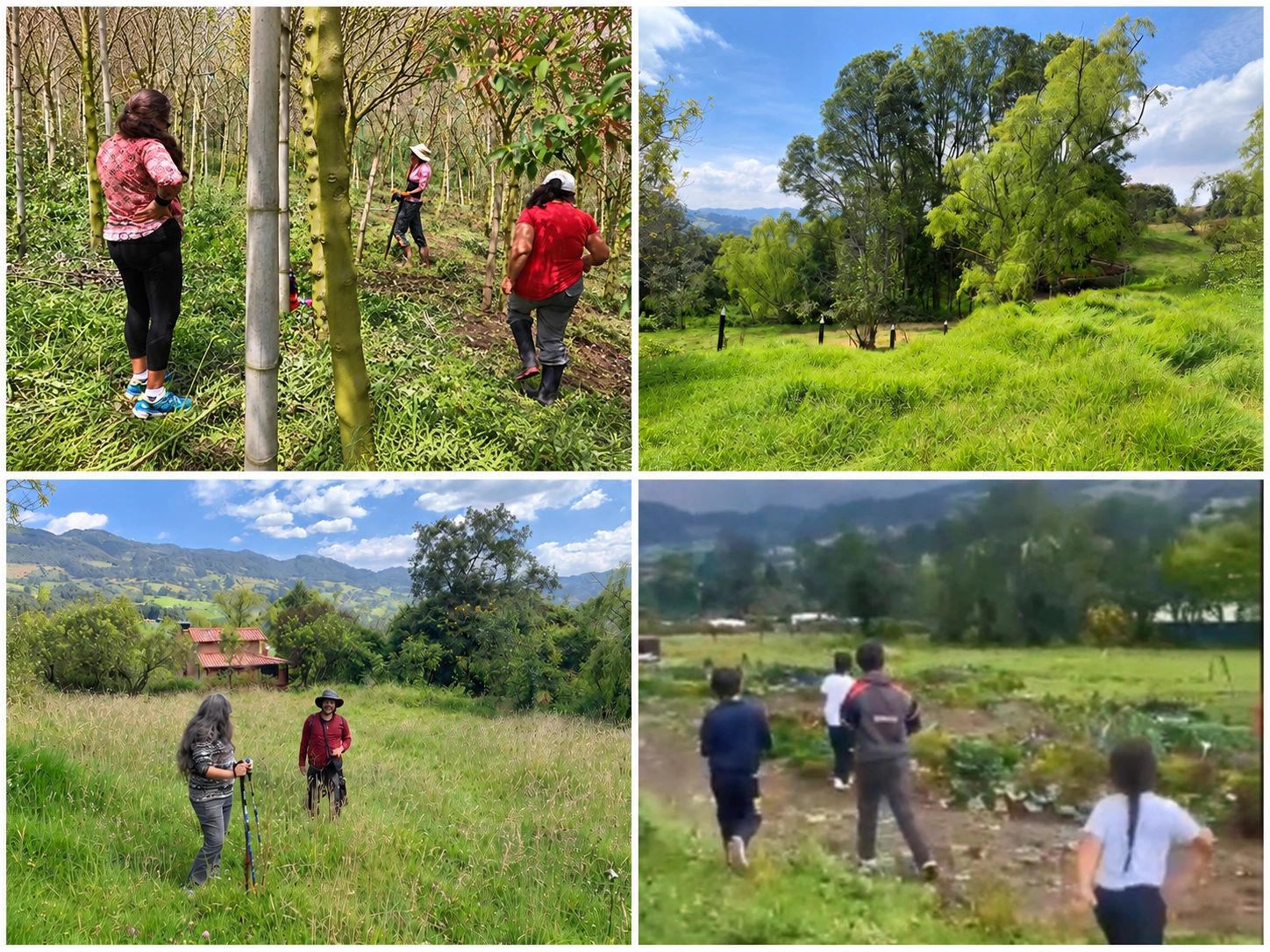
In Subachoque, learning can begin with the soil beneath our feet, the water moving through the landscape, an insect under a microscope, a plant, a frog, or a conversation with someone who has worked the land for decades.
The purpose is not simply to teach environmental facts
JAPAN — BIOCHAR AND SOIL RESTORATION
Learning from Farmers in Gifu, Japan
Gifu is also home to a pioneering Japanese biochar initiative. In 2025, a national demonstration project launched its first high-efficiency rice-husk biochar production unit there, exploring how agricultural residues can contribute to soil improvement and carbon storage.
An exchange with farmers in Gifu, Japan, introduced our project to the production and use of biochar made from rice husks and its integration into composting systems.
The experience opened new possibilities for exploring how biochar might improve soil health, water retention, and long-term carbon storage.
Rather than simply transferring a technique from Japan to Colombia, the question became how these practices could be tested and adapted to Subachoque's soils, climate, and agricultural conditions.
The central lesson: Innovation becomes meaningful when knowledge from elsewhere is tested and adapted to local realities.

ARGENTINA — LEARNING TO SEE THE LARGER LANDSCAPE
HPF’s learning in Argentina drew on the work of Fundación Bariloche and observations in Patagonia, particularly around Villa La Angostura and San Martín de los Andes.
Learning from these experiences reinforced the importance of looking beyond an individual farm or restoration project to understand the larger landscape in which it exists.
Agriculture, biodiversity, forests, water systems, rural livelihoods, and community well-being are interconnected. Decisions made in one part of the landscape can affect what happens elsewhere.
Learning from research, environmental planning, and different forms of knowledge also helped us consider how these interconnected relationships shape the landscape.
Remembering Patagonia’s History — Perito Moreno
During our travels in the Bariloche region, we also encountered the legacy of Francisco Pascasio Moreno (1852–1919), known as Perito Moreno, an Argentine explorer, naturalist, and geographer whose work contributed to the scientific understanding of Patagonia and the protection of its landscapes.
His remains were transferred in 1944 to Isla Centinela in Lake Nahuel Huapi, near the entrance to Brazo Blest, opposite the Llao Llao Peninsula. Boats traveling toward Puerto Blest traditionally sound their horns when passing the island in tribute to his legacy.
His resting place offers an opportunity to reflect on the history of exploration and conservation in Patagonia, as well as how our understanding of landscapes and our responsibilities toward nature continue to evolve.
What This Means for Subachoque
For Subachoque, the central lesson was not to replicate what we observed in Argentina, but to ask:
How can we understand our work as part of a larger living landscape rather than as a collection of separate agricultural and restoration activities?
And the broader principle connecting Argentina with our other international learning experiences remains:
Learning across places expands what we can imagine. Local knowledge helps determine what actually belongs.
GERMANY — RESTORATION TAKES TIME
Learning from Gut & Bösel
At Gut & Bösel, I saw degraded agricultural soil being protected and rebuilt through trees, soil cover, organic matter, diversity, composting, grazing—and patience.
What stayed with me was simple:
Restoration requires care, patience, and time.
This experience influenced how we approached soil regeneration in Subachoque, Colombia. Rather than copying the German model, we considered which principles could be adapted to our own landscape, particularly protecting exposed soil, restoring trees and living fences, increasing diversity, and rebuilding organic matter.
The central lesson: Learn from another place, but adapt what you learn to local conditions.
AMSTERDAM — FROM CIRCULARITY TO REGENERATION
Learning from De Ceuvel and Kloveniersburgwal
At De Ceuvel, a former Amsterdam shipyard became a living laboratory for circular innovation and ecological restoration. Reused houseboats, plants helping remediate contaminated soil, wastewater treatment, composting toilets, and experiments with food production demonstrated how seemingly separate systems could work together.
What impressed me most was the willingness to question assumptions about waste, water, land, and our responsibility toward nature.
De Ceuvel also adopted the Zoöp model, which gives the interests of other-than-human life formal representation in organizational decisions.
Another Amsterdam initiative, along the Kloveniersburgwal canal, showed how infrastructure designed to protect canal walls could also create habitat for aquatic life.
These experiences raised an important question for our work in Subachoque: How can decisions about ponds, pastures, crops, and water systems consider the needs of the entire living ecosystem?
We have not adopted the Zoöp model in Subachoque, but its underlying principle offers an important lesson:
One intervention can perform more than one function when we widen the lens.
These lessons bring us back to Subachoque, where protecting water, restoring agricultural land, and supporting biodiversity are interconnected. Understanding the surrounding landscape is essential to deciding how best to care for the land.

Protecting Water Begins with the Landscape
Subachoque sits within a larger Andean landscape where agriculture, forests, water systems, and high-altitude páramo ecosystems are deeply connected.
What if restoring the productivity and ecological health of existing agricultural land could also help reduce pressure on the ecosystems beyond it?
The project site is gradually becoming what we might describe as a living transition between agricultural land and natural ecosystems.

What We Are Learning
Subachoque continues to teach us that restoration is not a collection of separate activities. Soil, water, vegetation, crops, animals, biodiversity, and people respond to one another. A decision made in one part of the landscape can create consequences—or possibilities—somewhere else.
RELATIONSHIPS MATTER
Soil, water, vegetation, crops, animals, biodiversity, and people are connected. A decision made in one part of a landscape can create consequences—or possibilities—somewhere else. A pond can become habitat. A living fence can become a windbreak, shelter, habitat, and ecological connection. Grazing affects not only livestock, but vegetation, soil, water, and nutrient cycles.
TIME MATTERS
Ecological restoration has its own timeline. Land degraded over many years cannot be restored within the timetable of a single project or grant. Soil biology needs time to recover. Trees and shrubs need time to establish. Habitat needs time to develop.
In some areas of Subachoque, the soil had become so degraded and exposed that strong winds were carrying it away. We knew rebuilding healthy soil was fundamental. But first we had to ask: What does the soil need in order to remain here long enough to recover?
Living fences became part of that answer. Sometimes restoration begins not by repairing what has been lost directly, but by creating the conditions that allow recovery to begin.
This also raises an important question for those who support restoration: Are we creating conditions that make longer-term recovery more possible?

What We Are Learning.
Learning from elsewhere can expand what we imagine. But what works in one place cannot simply be transferred to another. Soil, climate, species, culture, history, institutions, resources, and knowledge differ. The response has to emerge from the place itself.
SEE THE WHOLE WITHOUT TRYING TO SOLVE THE WHOLE
Seeing the whole does not mean believing we can address everything at once. It means understanding enough of the larger system to make more thoughtful choices about where to begin, what relationships to protect, what consequences to consider, and what we still need to learn.
Sometimes the next responsible step is to observe more closely, learn from what is happening, and adjust what we do next.

What Comes Next
Restoration in Subachoque is an ongoing process. As the land becomes more stable and regenerated, our next priority is to strengthen biodiversity and restore the ecological relationships that sustain healthy ecosystems.
We plan to expand native High Andean plantings and identify the specific plants and habitats needed by native butterflies, caterpillars, bees, and other pollinators.
We also plan to develop a mobile Learning Lab that brings practical learning opportunities to farmers, students, and local communities. The Lab will support hands-on exploration of biodiversity, regenerative agriculture, water management, and locally relevant solutions.
Alongside these efforts, we will continue improving water management, expanding regenerative agricultural practices, and exchanging knowledge with partners in Colombia and internationally.
Our long-term goal is to support biodiversity recovery while creating more opportunities for people to learn, collaborate, and put knowledge into action.