
Learning from other places. Asking better questions.

HAWAIʻI
WHERE THE JOURNEY BEGAN
The learning began at home. On Oahu's North Shore, participants witnessed coastal erosion threatening homes. At Sand Island, they explored critical wastewater infrastructure. Together, these experiences raised questions that would guide the journeys to Miami, Charleston, and Boston: What have other communities tried? What has worked—or failed? And what can Hawaiʻi learn while adapting those lessons to its own realities?
MIAMI
LOOKING BENEATH THE VISIBLE PROBLEM
In Miami, participants explored how sea level rise affects far more than the shoreline. Visits to wastewater infrastructure, including Virginia Key, and conversations with researchers and practitioners revealed the connections among flooding, groundwater, drainage systems, and essential public services.
Miami also revealed the social dimensions of adaptation. Flooding does not affect everyone equally. Investments in pumps, elevated roads, and other protective infrastructure raise important questions about who benefits, who bears the costs, and whether adaptation can contribute to displacement and climate gentrification. Who can actually access an adaptation—not simply who theoretically has access to it ?

CHARLESTON
WHEN THE ABILITY TO ADAPT IS UNEQUAL
A solution is not equally available simply because it exists
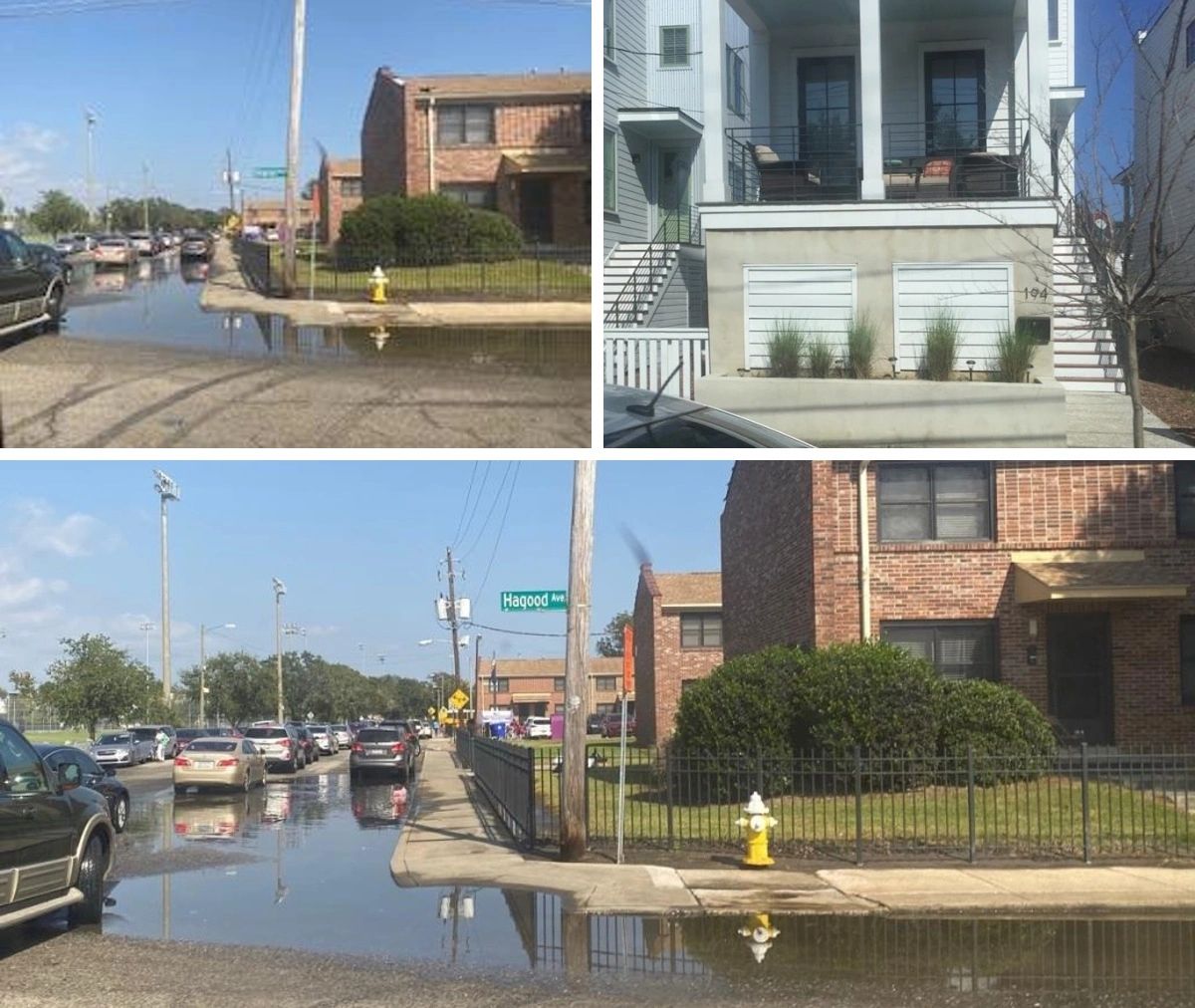
In Charleston, participants examined how historic neighborhoods, aging infrastructure, and repeated flooding shape adaptation decisions. The experience raised questions about whose homes and livelihoods can be protected, who has the resources to adapt, and what happens to communities that cannot afford the available solutions.
BOSTON
FROM BETTER INFORMATION TO BETTER-INFORMED DECISIONS.
What can the evidence tell us—and what still requires human judgment?
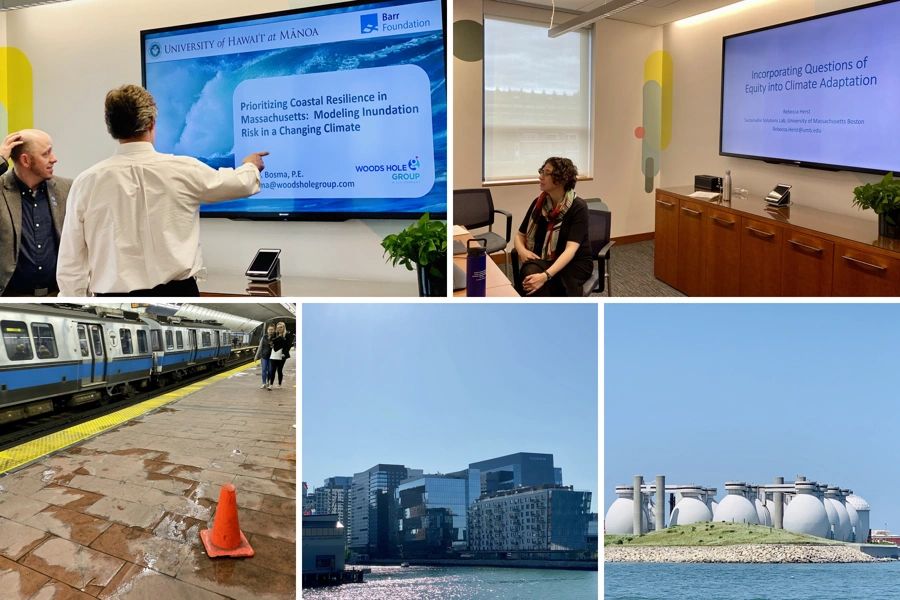
In Boston, participants explored how scientific modeling, flood projections, and urban planning can inform climate adaptation. Conversations with researchers and practitioners highlighted both the value and limitations of technical information. The journey raised questions about how communities interpret evidence, weigh competing priorities, and make decisions when uncertainty remains.
CRITICAL INFRASTRUCTURE AT THE WATER’S EDGE
PROTECTING INFRASTRUCTURE MEANS UNDERSTANDING THE SYSTEM AROUND IT
Protecting one piece of infrastructure does not necessarily protect the system around it.
Across Hawaiʻi, Miami, Charleston, and Boston, participants examined how wastewater facilities, stormwater systems, transportation networks, and coastal infrastructure are connected. Protecting these essential services requires looking beyond individual facilities to the surrounding communities, access routes, and natural systems. The visits revealed that infrastructure decisions are also decisions about public health, equity, and long-term resilience.

WHAT WE LEARNED ACROSS CITIES
IDEAS CAN TRAVEL. SOLUTIONS RARELY TRAVEL UNCHANGED.
Across Miami, Charleston, and Boston, participants encountered different approaches to similar challenges. Each city offered valuable lessons, but also revealed how geography, history, institutions, resources, and community priorities shape what is possible. An approach that works in one place cannot simply be transferred to another.
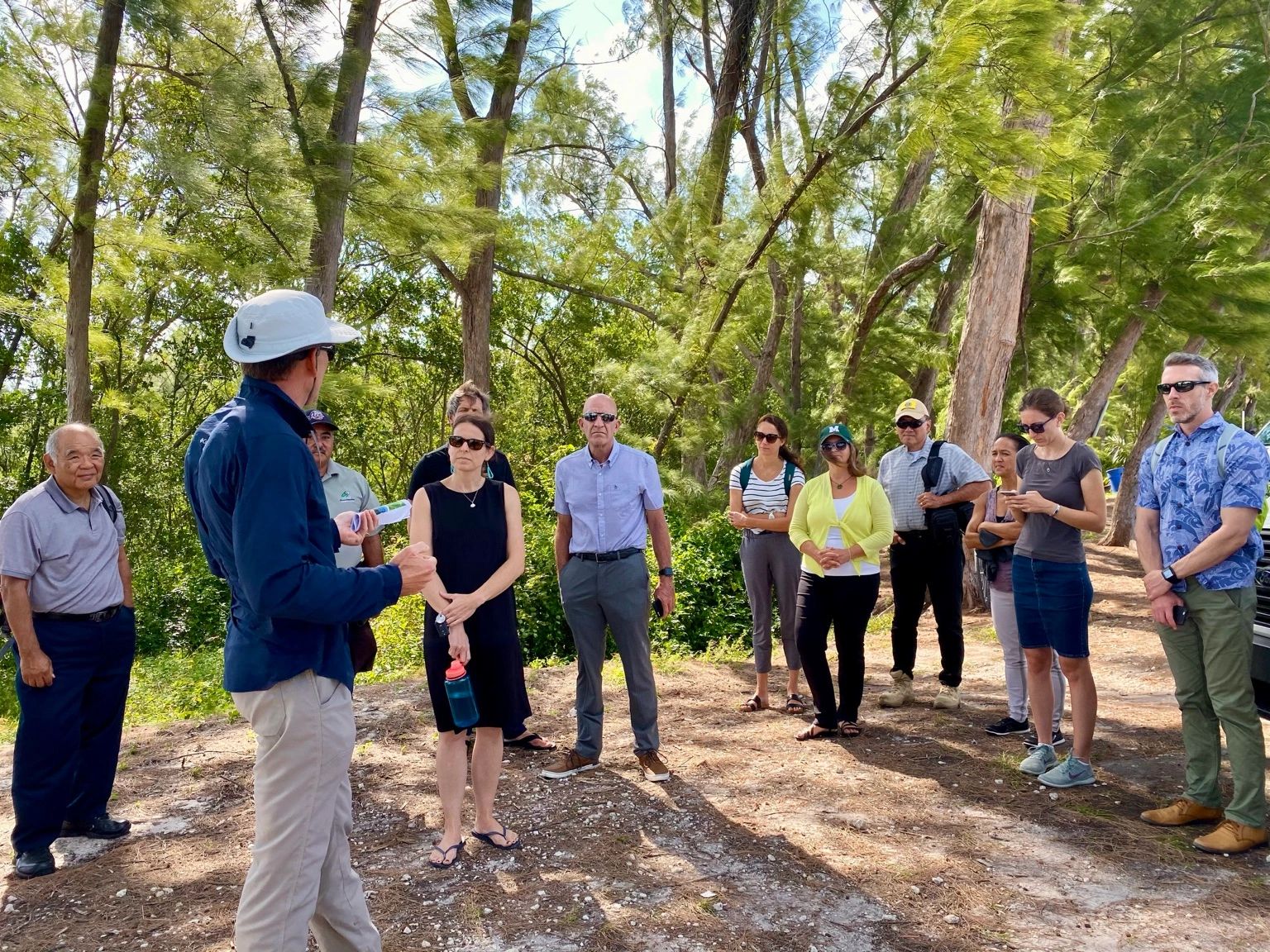
The journeys reinforced the importance of learning directly from people and places, listening across different perspectives, and questioning our assumptions. Scientific evidence, practical experience, and community knowledge each contribute something essential. The challenge is to bring these insights together and adapt them thoughtfully to Hawaiʻi's own circumstances.
FROM LEARNING TO SHARING
REPORTS & PRESENTATIONS
These reports and presentations capture lessons from HPF’s learning journeys, research, exchanges, and place-based work. We share them not as prescriptions, but as invitations to learn from what others have tried, consider what might apply in different contexts, and adapt ideas to local realities.
